Explore the Sacred Ashtavinayak Temples
The Ashtavinayak Yatra is a revered pilgrimage that takes devotees through eight ancient and powerful temples dedicated to Lord Ganesha, scattered across the serene landscapes of Maharashtra. Each temple holds a unique legend and significance, reflecting different forms and stories of the beloved Elephant God.
From the self-manifested idol of Moreshwar in Morgaon to the miraculous Siddhivinayak of Siddhatek, every shrine offers a divine experience that blends myth, devotion, and regional heritage. Whether you're a spiritual seeker or a culture enthusiast, the Ashtavinayak journey is an enriching experience for the soul.
Shivrudra Travels makes your pilgrimage journey comfortable, timely, and spiritually fulfilling with our trusted Pune to Ashtavinayak cab services. Discover devotion on the move with us!
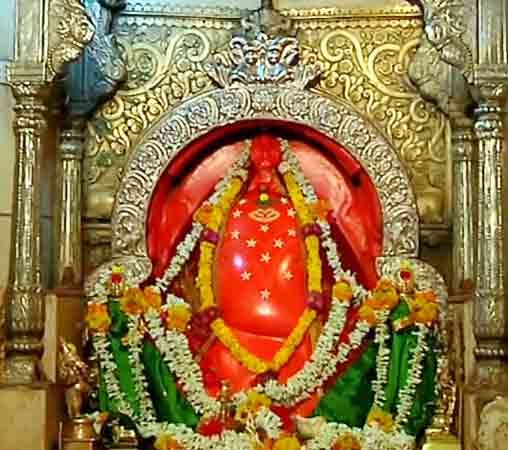
Mayureshwar- Morgoan
Located on the banks of the Karha River in the Pune district of Maharashtra, Morgaon is home to the revered Mayureshwar temple, the first and central shrine in the Ashtavinayak pilgrimage circuit. This sacred temple is dedicated to Lord Ganesha in his Mayureshwar form—depicted as riding a peacock, symbolizing victory over ego and ignorance. According to legend, Lord Ganesha incarnated here to defeat the demon Sindhu, restoring peace and righteousness. The temple is believed to be self-manifested (Swayambhu), and its idol faces the north, a unique architectural feature among Ganesha temples. Enclosed by a stone boundary resembling a fort, the temple has four majestic gates, each guarded by sculpted idols of various deities. The spiritual ambiance of Morgaon, combined with the intricate carvings and historical importance, makes it a must-visit destination for devotees and cultural travelers alike. As the starting point of the Ashtavinayak Yatra, visiting Mayureshwar sets a deeply devotional tone for the entire journey.
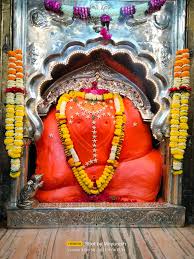
Siddhivinayak-Siddhatek
Siddhatek, located on the banks of the Bhima River in the Ahmednagar district of Maharashtra, is home to the Siddhivinayak Temple—one of the eight sacred Ashtavinayak shrines dedicated to Lord Ganesha. This temple holds immense spiritual significance as it is believed to be the place where Lord Vishnu invoked Ganesha’s blessings before slaying the demons Madhu and Kaitabha. The name "Siddhivinayak" signifies the Giver of Success, and devotees strongly believe that prayers offered here help remove obstacles and grant success in all endeavors. The temple houses a rare idol of Lord Ganesha with a right-turned trunk (Dakshinabhimukhi), considered especially powerful and auspicious. Perched atop a small hillock and surrounded by scenic natural beauty, the temple is accessible via a peaceful walk across a bridge and through the village. Siddhatek offers a tranquil and spiritually charged environment, making it a vital stop on the Ashtavinayak route for those seeking inner strength, wisdom, and divine blessings.
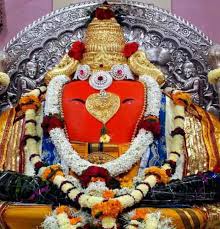
Ballaleshwar-Pali
The Ballaleshwar Temple, located in the serene village of Pali in Maharashtra's Raigad district, holds a unique and significant place among the Ashtavinayak temples dedicated to Lord Ganesha. It is particularly distinct as it is the only Ganesha temple named after a devotee, Ballal, rather than the deity himself, symbolizing the profound spiritual connection between the Lord and his ardent follower. The temple's origins trace back to an initial wooden structure in the 11th century, which was later transformed into a robust stone edifice in 1760 under the patronage of Shri Fadnis, designed ingeniously in the shape of the sacred letter 'Shri' and fortified with a mix of lead and cement for enhanced durability. The architectural marvel features two sanctums, an inner one standing at 15 feet and an outer one at 12 feet, with a main hall extending 40 feet in length and 20 feet in width, supported by eight intricately carved pillars resembling cypress trees. A unique aspect of the temple's design is its east-facing orientation, ensuring that the rays of the rising sun fall directly on the idol, especially during the winter solstice. The temple complex is also adorned with two lakes, with water from one traditionally used for Ganesha's worship, and a noteworthy bell brought by Chimaji Appa after his victory over the Portuguese.
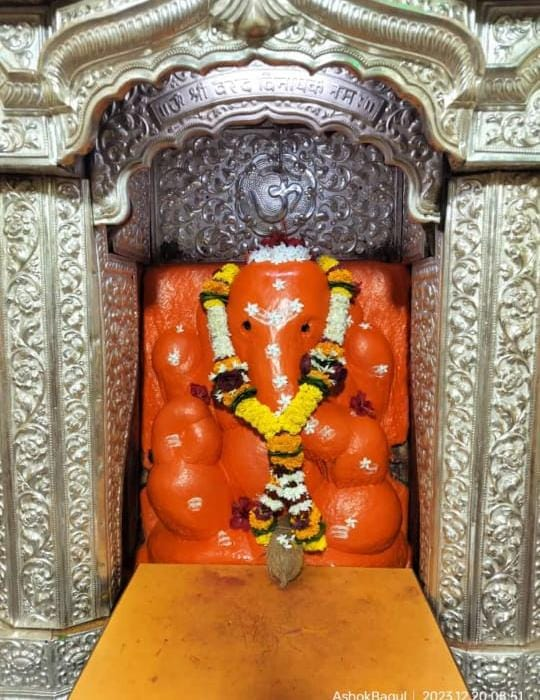
Varadvinayak-Mahad
The Varadvinayak Temple, nestled in the village of Mahad in Maharashtra's Raigad district, is another revered shrine among the Ashtavinayak temples of Lord Ganesha. This temple is particularly significant as it is believed to be the "giver of boons," with "Varad" meaning boon and "Vinayak" being another name for Ganesha. The temple's origins are rooted in ancient legends, including the story of King Bhima and Sage Vishwamitra, and the sage Gritsamada, who is credited with establishing the temple after being blessed by Ganesha. The current structure of the Varadvinayak Temple is largely attributed to Peshwa General Ramji Mahadev Biwalkar, who restored it in 1725 AD. The architecture is characterized by its simplicity and elegance, featuring a tiled roof and a 25-foot high dome topped with a golden pinnacle (Kalasha) that has a carving of a cobra. The sanctum sanctorum, which is 8 feet long and 8 feet wide, is made of stone and adorned with beautifully carved elephant sculptures. Notably, the temple houses two idols of Ganesha: the original 'Swayambhu' (self-originated) idol, which was found immersed in an adjoining lake in 1690 AD and is now placed outside the sanctum, and a newer consecrated idol inside.
Chintamani-Theur
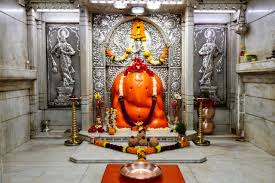
The Chintamani Temple, located in Theur village near Pune, Maharashtra, is a revered Ashtavinayak shrine dedicated to Lord Ganesha. The name "Chintamani" translates to "remover of worries," and the temple is believed to help devotees alleviate their anxieties and fulfill their desires. The village name "Theur" is said to originate from the Sanskrit word "Sthavar," meaning stable, referencing a legend where Lord Brahma's restless mind became stable after meditating on Ganesha here. The temple has a rich history, with its current structure largely influenced by the Peshwa rulers, especially Madhavrao I, who was a devout follower of Ganesha and constructed the teakwood hall (Sabha Mandap) in the 18th century. The idol of Lord Ganesha in the temple is considered 'Swayambhu' (self-originated) and faces east, with its trunk turned to the left and eyes adorned with jewels. The temple complex also includes smaller shrines dedicated to other deities like Lord Shiva, Vishnu-Lakshmi, and Hanuman. A unique feature is a black stone water fountain in the main hall.
Girijatmaj-Lenyadri-cave
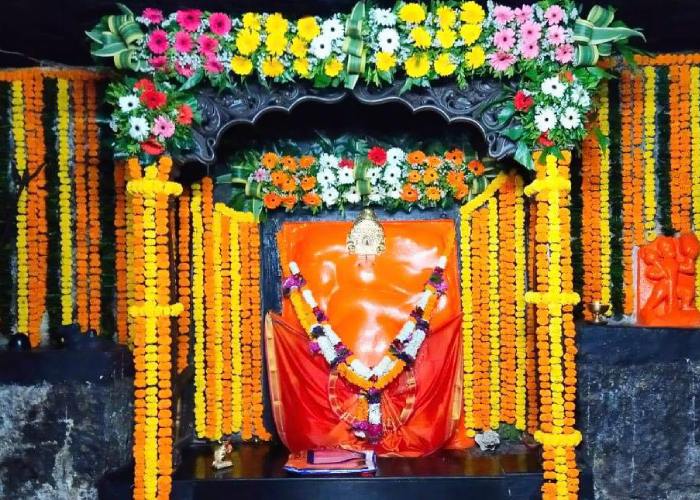
The Girijatmaj Temple at Lenyadri, located near Junnar in the Pune district of Maharashtra, stands as a truly unique and significant shrine among the Ashtavinayak temples of Lord Ganesha. Its distinctiveness lies in its setting: unlike traditional temples constructed with bricks and mortar, the Girijatmaj temple is carved directly into a rock-cut cave, part of a larger complex of ancient Buddhist caves. This architectural marvel blends spiritual devotion with historical significance, as the caves themselves date back to the 1st to 3rd century AD and were originally Buddhist viharas (monasteries). The name "Girijatmaj" literally translates to "Son of Girija," referring to Goddess Parvati, who is believed to have performed intense penance in these very caves to beget Ganesha as her son. Legend has it that Ganesha, in his child form, manifested here, making Lenyadri the only Ashtavinayak temple where Ganesha is worshipped as a child (Bala Rupa). This mythological connection draws thousands of devotees seeking blessings from the divine child-form of Ganesha.
Vighneshwar-Ozar
The Vighneshwar Temple, located in the picturesque village of Ozar in Maharashtra's Pune district, is a significant shrine among the eight revered Ashtavinayak temples dedicated to Lord Ganesha. The name "Vighneshwar" translates to "Lord of Obstacles" or "Remover of Obstacles," stemming from a popular legend. According to this myth, a powerful demon named Vighnasura was causing widespread disruption by interfering with sacred rituals and troubling sages. The gods sought Ganesha's intervention, and after a fierce battle, Ganesha defeated the demon. Vighnasura, remorseful, pleaded with Ganesha to be associated with his name, thus giving Ganesha the epithet Vighneshwar, signifying his power to overcome all hindrances. The present structure of the Vighneshwar Temple is a testament to Peshwa-era architecture, with substantial renovations carried out by Chimaji Appa, the younger brother of Peshwa Baji Rao I. After his victory against the Portuguese at Vasai Fort, Chimaji Appa adorned the temple's dome (shikhara) with gold as a token of gratitude, making it a prominent and unique feature among the Ashtavinayak temples. The temple's construction is believed to date back to 1785 AD, with further renovations in 1967 by Appa Shastri Joshi.
Mahaganpati-Ranjangoan
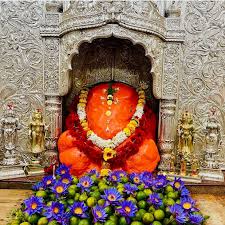
The Mahaganapati Temple, situated in the village of Ranjangaon, approximately 50 kilometers from Pune, is a prominent and highly revered shrine among the Ashtavinayak temples of Lord Ganesha. This temple is deeply rooted in Hindu mythology, particularly associated with the legend of Lord Shiva's victory over the formidable demon Tripurasura. It is believed that Lord Shiva invoked Lord Ganesha at this very spot before engaging in battle, and only after receiving Ganesha's blessings was he able to vanquish the demon. As a gesture of gratitude, Shiva then established an idol of Ganesha here, which came to be known as Mahaganapati, signifying Ganesha's supreme power. The temple's history dates back to the 9th and 10th centuries, reflecting ancient Indian architectural grandeur. Over time, various rulers and devotees contributed to its expansion and renovation. The inner sanctum is largely credited to Peshwa Madhavrao I, who was a frequent visitor to the temple and built the stone structure around the Swayambhu (self-originated) idol. Later additions, including the grand stone structures and fortifications, were made under the patronage of figures like Malharrao Holkar and Mahadji Shinde. A notable feature of the temple is its east-facing orientation, strategically designed so that the rays of the rising sun fall directly on the idol, especially during the winter solstice, creating a truly divine spectacle.
Best Car Rental from Pune to Ashtavinayak
Shivrudra Travels offers reliable and affordable Pune to Ashtavinayak cab services. Embark on a spiritual journey to the eight revered Ganpati temples across Maharashtra — from Mayureshwar in Morgaon to Mahaganapati in Ranjangaon — with comfort and convenience in one seamless pilgrimage experience.
Ashtavinayak 1 Day Package
| TYPE OF VEHICLE | PER DAY AMOUNT | TOLL & PARKING | DRIVER ALLOWANCE | KM LIMIT | EXTRA KM |
|---|---|---|---|---|---|
| HATCH BACK | 6,000/- | EXCLUDING | INCLUDING | 300KM | 12RS |
| SEDAN | 6,500/- | EXCLUDING | INCLUDING | 300KM | 13RS |
| ERTIGA | 7,500/- | EXCLUDING | INCLUDING | 300KM | 16RS |
| MARAZZO | 9,000/- | EXCLUDING | INCLUDING | 300KM | 18RS |
| INNOVA CRYSTA | 11,000/- | EXCLUDING | INCLUDING | 300KM | 22RS |
Ashtavinayak 1 Night 2 Days Package
| TYPE OF VEHICLE | BUDGET | STANDARD | ELITE | NO OF PASSENGER |
|---|---|---|---|---|
| HATCH BACK | 10,000/- | 11,000/- | 15,000/- | 2 PAX |
| SEDAN | 11,000/- | 12,000/- | 16,000/- | 2 PAX |
| ERTIGA | 13,000/- | 14,000/- | 18,000/- | 4 PAX |
| INNOVA | 15,000/- | 16,000/- | 21,000/- | 6 PAX |
Including
24×7 Customer Support
Money Back Guarantee
600+ Google Reviews
100% on Time Every Time
Free Home Pickup & Drop
Plan Your Perfect Journey with Shivrudra Travels
Whether you're embarking on the sacred Ashtavinayak Yatra or seeking blessings at the eight revered Ganesh temples spread across Maharashtra, Shivrudra Travels ensures a safe, comfortable, and hassle-free ride from Pune. With experienced drivers, clean vehicles, and timely service, we make your spiritual journey smooth and memorable. Book your cab now and experience divine peace without any travel worries.
Book Your Cab Now